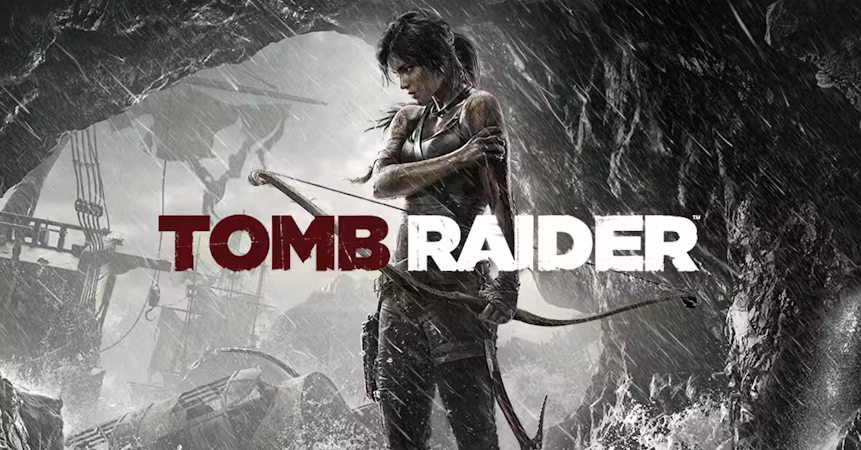
Crystal Dynamics really wanted to create a new Uncharted. They took a classic puzzle-platforming icon who defined 90s action and stripped away her old gameplay, replacing them with cinema-grade camera work, high-octane set pieces, and visceral third-person cover shooting. But where Nathan Drake brought charming quips and breezy pulp adventure, Lara Croft’s origin story took a far grittier turn into survival horror territory. The core goal was ambitious: elevate Tomb Raider into the modern blockbuster era while convincing players that Lara’s transformation from an inexperienced archaeologist into an unstoppable survivor felt earned, intense, and mechanically grounded.
Let’s again analyse the game:
- Presentation & Atmosphere
Yamatai is an absolute masterclass in environmental atmosphere. The weather-beaten island feels hostiles and alive, loaded with ominous rainstorms, decaying Japanese military bunkers, ancient shipwrecks, and atmospheric ritual caves that heavily pull you into Lara’s desperate struggle. The dynamic lighting, audio design, and gore-heavy death animations sell the brutal physical toll of her ordeal with harrowing precision.
However, the game’s presentation suffers from severe narrative and visual dissonance. The camera’s unyielding fascination with “torture porn” tropes during early quick-time events crosses the line from tension into gratuitous shock value. Furthermore, the theatrical melodrama of the cutscenes (where Lara cries over her first necessary kill) completely clashes with the gameplay less than five minutes later, where she operates as a cold-blooded exterminator popping headshots with semi-automatic weaponry.
Score: 1.5 / 2
- Engagement & Reactivity
Mechanically, Tomb Raider feels snappy and responsive in your hands. The automatic cover system is remarkably fluid, eliminating the clunky button-snapping of contemporary shooters, while the combat loop seamlessly blends bow-and-arrow stealth with aggressive gunplay. Traversing cliffs with the climbing axe and zip-lining across vertical chasms delivers instant, highly satisfying tactile feedback.
Where the engagement collapses, however, is in the overwhelming reliance on quick-time events (QTEs) during set-piece sequences. The game frequently strips away player agency in favor of “press X to not die” button prompts during scripted slides and collapses. Furthermore, enemy combat AI in open gunfights relies heavily on rushing your cover in predictable, linear lines, making high-level encounters feel more like an arcade gallery shoot than a tactical fight for survival.
Score: 1 / 2
- Value & Mastery
The game offers a solid, well-paced core campaign with a healthy spread of weapon upgrade trees, gear unlocks, and collectible lore documents that flesh out the island’s dark history. Unlocking tools like the rope dart or grenade launcher actively opens up back-trackable sections of the hub zones, lending a light, satisfying Metroidvania rhythm to exploration.
Unfortunately, the title “Tomb Raider” becomes almost sarcastic when analyzing its actual tomb design. The optional Challenge Tombs are criminally short and insultingly simple—often consisting of a single room with a single physics puzzle that takes less than three minutes to solve. To make matters worse, the included competitive online multiplayer mode was an utterly uninspired shoehorned tack-on that felt dead on arrival and offered zero lasting value.
Score: 0.5 / 2
- Polish & Readiness
Technically, Tomb Raider was a marvel of optimization at release and remains extraordinarily stable. Frame rates hold steady during massive set-piece explosions, loading screens are virtually non-existent during active gameplay thanks to clever cinematic transitions, and collision detection across complex platforming geometry is tight.
My primary technical issue lies in the reliance on Survival Instinct vision, which highlights interactive objects and puzzle elements in glowing yellow. While optional, the game’s environmental visual density often forces you to toggle it on, turning the screen into a muted gray filter that destroys the game’s gorgeous lighting just so you don’t miss a tiny salvage box or climbable ledge. Additionally, physics objects in environmental puzzles can occasionally lock up or jitter if disturbed out of sequence.
Score: 1.5 / 2
- Respect & Structure
The game excels at pacing its gear progression, steadily transforming Lara from an under-equipped survivor into a heavily armed force of nature. The UI is beautifully minimal, keeping the HUD free of unnecessary clutter and letting the environmental vistas take center stage without patronizing text boxes.
Where it fails to respect the player is in its hand-holding nature regarding exploration and puzzles. Lara constantly spoils puzzle solutions aloud if you stand in a Challenge Tomb for more than twenty seconds (“Maybe I can burn those sacks…”), completely robbing the player of any genuine intellectual payoff. The leveling system also gated certain basic combat skills behind arbitrary tier locks, forcing minor EXP farming early on.
Score: 1 / 2
Bonus: Couch Co-Op
Tomb Raider (2013) is a strictly single-player cinematic adventure narrative. While it attempted to shoehorn in an online multiplayer suite, it completely omitted any form of local shared-screen or couch co-op options. I didn’t expect anything in this case, but the online was simply unnecessary.
Score: 0 points
Platforms & Versions: Where Should You Play?
- The Legacy Originals (PS3, Xbox 360): Impressive for 2013 hardware, but hindered by sub-720p resolutions, severe frame rate dips during heavy action set-pieces (often dropping below 30 FPS), and muddy texture filtering.
- The Definitive Editions (PS4, PS5, Xbox One, Xbox Series X/S): A massive step up featuring a completely reworked, more detailed character model for Lara, improved TressFX hair physics, locked 60 FPS performance, upgraded lighting, and all DLC bundled together natively.
- The Switch port: why? 12 years later, they launched a game as stable as the ps3 version. Don’t bother, even on Switch 2, the game is no match for the ps4/xbox one version of the game, and for me, even ps3 version is better. Playable on portable mode if you really like the game, but on docked it’s just a disrespect.
- PC Version: Outstanding technical execution. Featuring full TressFX hair simulation options, uncapped frame rates, true 4K resolution support, and ultra-fast load times on SSDs.
- Android/iOS: The best portable experience for me. They should teach the team who made the Switch version how to do a port. Incredible, and you can even select “Performance” and “Fidelity” mode, to better suite your cellphone.
- My Verdict on the BEST Version: The PC Version takes the technical crown for raw fidelity and high frame rates if you have an amazing gaming pc, but the Definitive Edition on modern PlayStation/Xbox consoles provides an absolute amazing experience—delivering buttery-smooth 60 FPS gameplay, revamped character visuals, and effortless controller integration right out of the box.
My Verdict
The 2013 reboot of Tomb Raider remains an impressive, high-octane cinematic action game that successfully modernized an icon for a new generation. It trades traditional, complex tomb-puzzling for explosive set-pieces, satisfying combat mechanics, and top-tier environmental presentation. While it suffers from ludonarrative dissonance, insultingly brief tombs, and patronizing puzzle hand-holding, its moment-to-moment thrill ride still holds up today. It belongs in any action game fan’s rotation, even if it lost a bit of its classic identity along the way.
Final Score: 5.5 / 10
Badge: Collection Badge
Why a 5.5 game deserves the collection badge? Because of Lara Croft It’s not only because it’s the first of the trilogy, followed by two much better ones. For me, it’s one of the environments that stuck with me ever since I played for the first time on Xbox 360, and even thought it’s not the game that makes you want to replay right after you finish, it’s a game that I’ll believe everybody can have a nice time playing it.
Collection Showtime
Unfortunately, I don’t have my original Xbox 360 version, but my PS4 is standing and strong 🙂
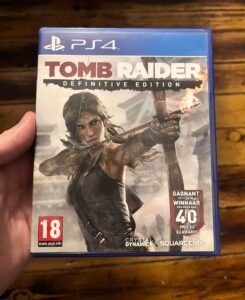
And as this is the case of a game that I enjoy so much, that I also have the digital version, so I can play when I’m not at my home.